DGX Spark Alternatives: What to Buy Instead
In today's post we're taking a closer look at the DGX Spark alternatives, and why, with the Spark at $6,950 and out of stock, a desktop graphics card is still the better buy for most people, with a 128GB Strix Halo mini PC or a Mac Studio for the models that won't fit on one. Every price is as of 10 October, and I've put my own pair of modded 48GB 4090Ds up against the Spark.
 Richard Baxter AI Ops & Marketing Engineer
On this page
- The DGX Spark alternatives at a glance
- What the DGX Spark is, and what it costs now
- Bandwidth sets the speed, memory sets the model size
- Other GB10 boxes: the same Spark from another maker
- Strix Halo mini PCs: the cheaper route
- Mac Studio: the fastest unified-memory box for one user
- A desktop GPU, if your models fit
- Which one should you buy?
- Things to check before you buy
- Related Posts
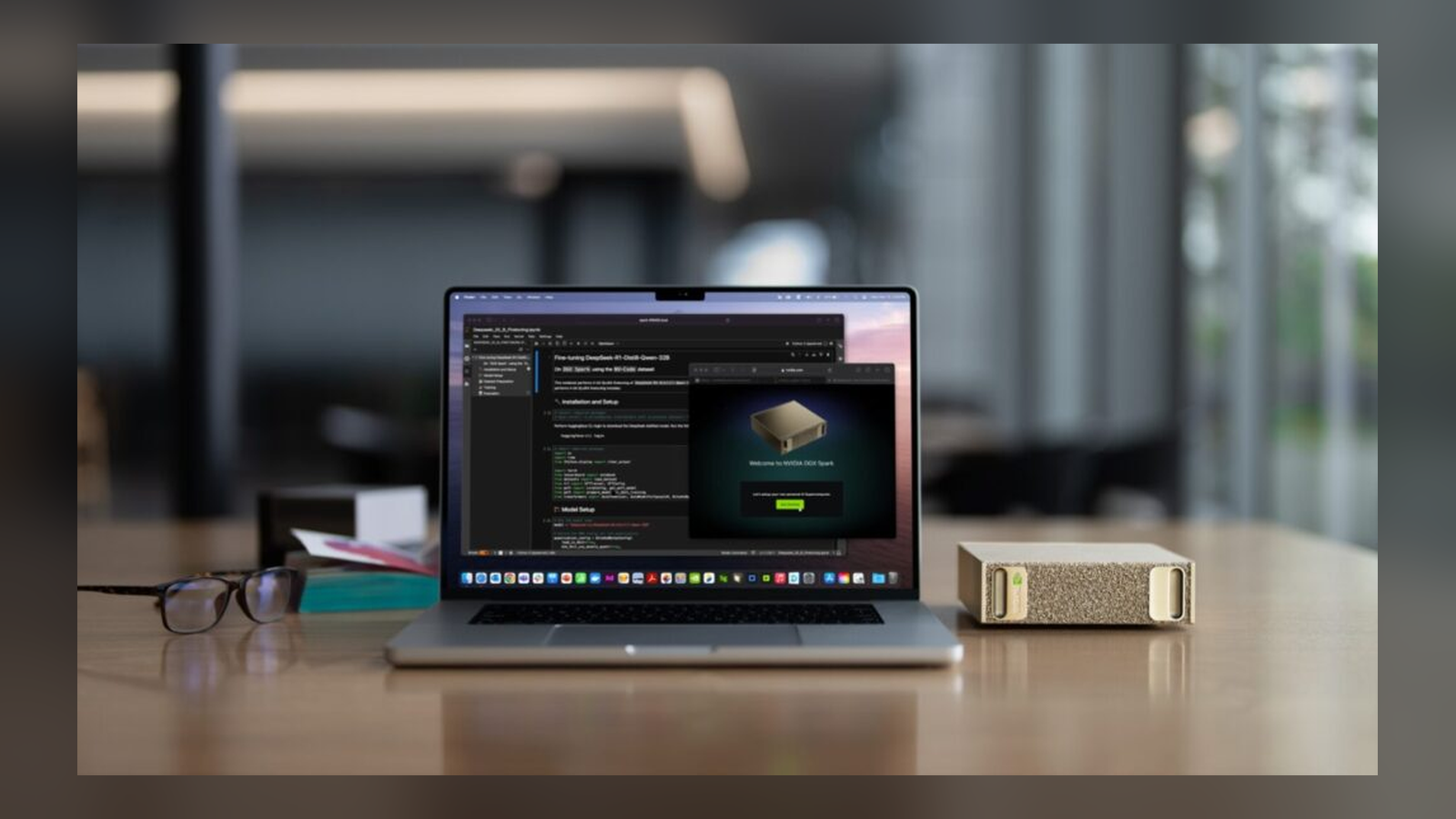
I've been running a local LLM on a variety of bootstrapped bits of hardware, water-cooled 3090's and an LLM server I called Hopper, full of older Ada-spec GPUs. Hopper has since been replaced by a pair of 48GB 4090Ds (the Chinese-market version) - together they cost about half an RTX Pro 6000, which has become extremely expensive.
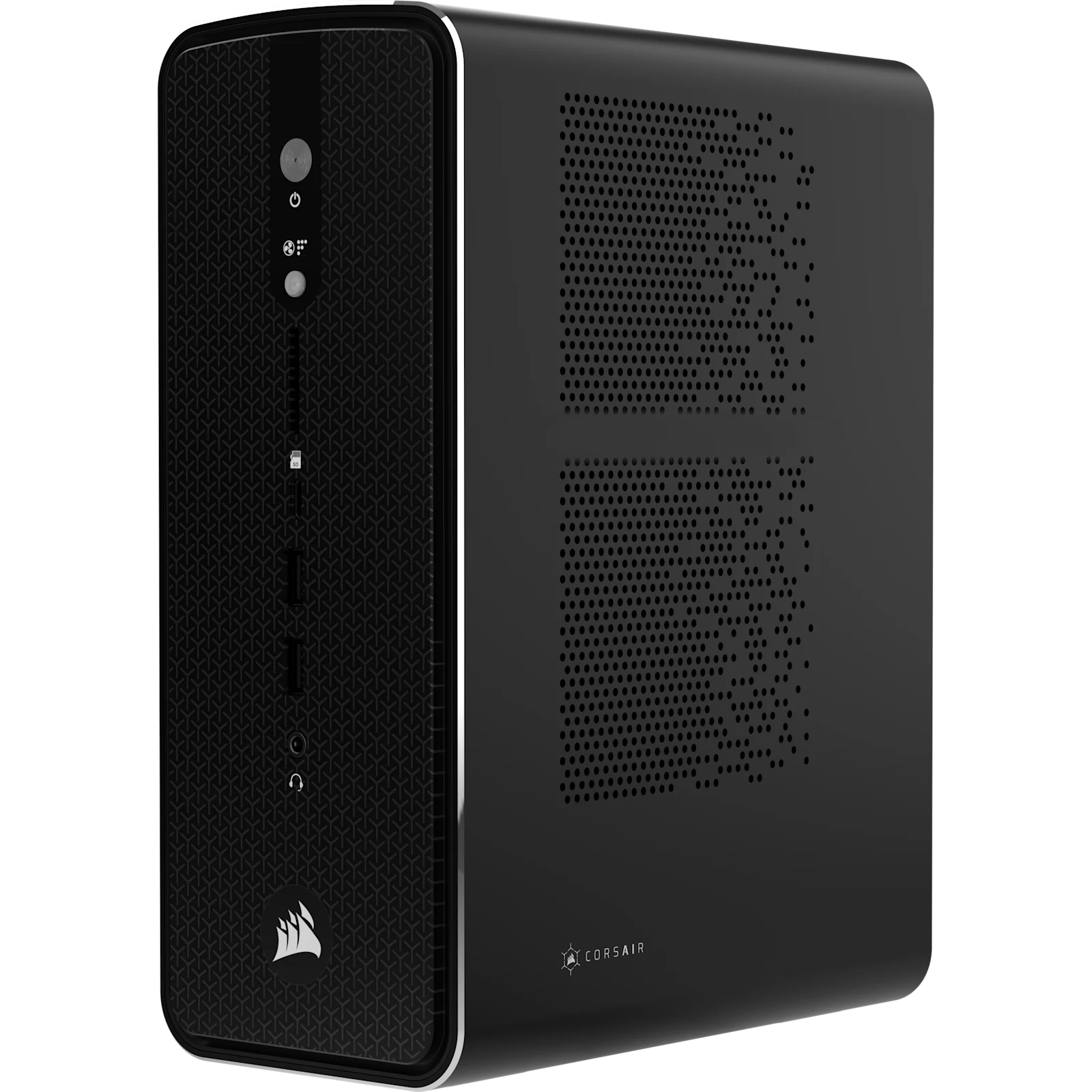
The NVIDIA DGX Spark launched at $3,999. Earlier this year it went to $4,699, and on 2 October NVIDIA put it up to $6,950, which would sting more if you could buy one - it's out of stock on NVIDIA's own store. So if you're looking for something else, most people are still better off with a desktop graphics card. If your models need 128GB, it's an AMD Strix Halo mini PC or a Mac Studio, and which of those suits you depends on what you run. Strix Halo is the route that makes the Spark's price hard to justify. On 10 October you could buy a 128GB Strix Halo box, in stock, for between $3,099 and $4,599.99. The cheapest was the Bosgame M5, direct from Bosgame (it's $3,599 on Amazon), and the dearest was the Corsair AI Workstation 300, from Corsair. So you're paying $2,350 to $3,850 less than the Spark, for a machine that generates text at about the same speed.
The DGX Spark alternatives at a glance
The prices in the table below are in US dollars, from the maker's own store, Corsair or Amazon on 10 October 2026. The two exceptions are the used 3090 range, which comes from a used-price tracker and eBay sales, and my own cards, which I paid for in pounds. Keep an eye on the bandwidth column. Memory bandwidth is how fast the chip can read its memory, in GB/s, and it predicts how quickly a machine writes its answer - there's more on why further down. There are four routes: another maker's version of the Spark, built on the same GB10 chip; an AMD Strix Halo mini PC; an Apple Mac Studio; or a desktop graphics card in a normal PC.
| Route | One to buy | Memory | Bandwidth | Price on 10 Oct 2026 | Best for |
|---|---|---|---|---|---|
| NVIDIA DGX Spark | NVIDIA DGX Spark at Corsair | 128GB | 273 GB/s | $6,950 at NVIDIA, $5,199.99 at Corsair - both out of stock | CUDA work, long prompts, clustering |
| Another GB10 box | Dell Pro Max with GB10 | 128GB | 273 GB/s | $5,903 (2TB), ships in about four weeks | The same Spark, cheaper |
| Strix Halo mini PC | GMKtec EVO-X2 | 128GB | 256 GB/s | $3,499.99 on Amazon | One user on a budget |
| Strix Halo, from Corsair | Corsair AI Workstation 300 | 128GB | 256 GB/s | $4,599.99, in stock | A Windows desktop that also runs big models |
| Mac Studio | Mac Studio, M5 Max, 128GB | 128GB | 614 GB/s | $5,399 at Apple | The fastest of the 128GB boxes for one person |
| Desktop GPU | Used RTX 3090 | 24GB | 936 GB/s | About $1,025-$1,275 used; $1,794.99 renewed on Amazon | Models up to about 30B, at about 3x a Spark's generation speed |
| My rig | Two modded 48GB RTX 4090Ds | 96GB | 1,008 GB/s per card | About £6,200 for the pair | Big models at desktop-GPU speed, if you can live with the power and heat |
If you're buying, that's most of what you need. A GB10 box is for people who build on CUDA (NVIDIA's software layer for running code on its GPUs) and deploy to NVIDIA hardware. Strix Halo is the budget route for one person running big models, and it doubles as a Windows desktop. Of the 128GB boxes, the Mac Studio generates fastest for a single user. On a model that fits on the card, a desktop GPU is quicker still: a used 3090 generates about 3x as fast as a Spark. Everything after this is the detail for whoever has to run the thing.
What the DGX Spark is, and what it costs now
NVIDIA first showed this machine as Project DIGITS at CES in January 2025, renamed it the DGX Spark in March 2025, and started shipping it on 15 October 2025. Inside is the GB10 chip, which NVIDIA calls Grace Blackwell: a 20-core Arm CPU and a Blackwell GPU sharing 128GB of unified memory. Unified memory is one pool that both the CPU and the GPU use, rather than system RAM on one side and graphics card memory on the other, and on the Spark it's read at 273 GB/s. Around the back there are four USB-C ports, HDMI 2.1a, 10GbE and a ConnectX-7 network card good for 200 Gbps. It runs DGX OS, which is NVIDIA's build of Ubuntu. The whole thing measures 150 x 150 x 50.5mm, weighs 1.2kg, and NVIDIA rates it at 35 dB under load, so it's a quiet box.
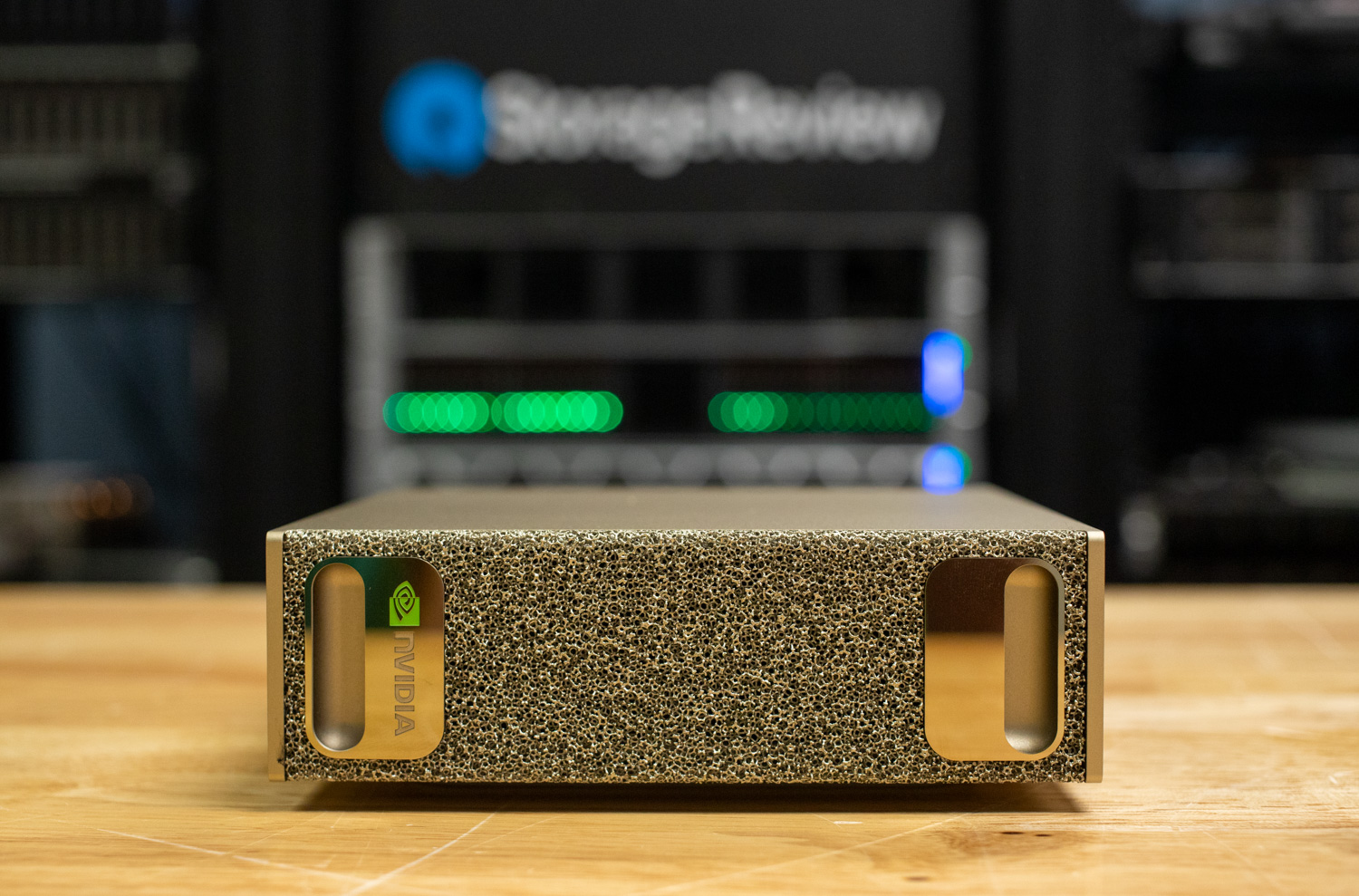
NVIDIA's own store has it at $6,950 and out of stock. Corsair lists it at $5,199.99, but that's out of stock too, and on Amazon the only offers are from third-party sellers at around $9,000. Plus I expect to see gen 1 DGX Sparks on ebay for $500 in 2 years time.

The software has moved a long way since launch. Timothy Carambat from AnythingLLM, who used a Spark as his daily driver for about a week and a half, saw about 30 tokens per second (tok/s) on gpt-oss-120b in launch week. gpt-oss-120b is an MoE model, which means it only uses part of itself for each token - about 5.1 billion of its 117 billion parameters. By February 2026, ggml-org's tuned llama.cpp build measured 58.7 tok/s decode (generating the answer, one token at a time) and about 2,444 tok/s prefill (reading the prompt before the first word comes back).
Carambat ran his headless (no screen or keyboard of its own), as a home lab on the network that every other device talks to, and he pitches it "for the home lab use case where people have been chaining [Mac Minis] together". Don't buy a mini for anything. Ugh.
Bandwidth sets the speed, memory sets the model size
As it happens, there are really only two numbers that decide most of how well one of these machines runs a model. Memory capacity decides whether the model loads at all. Memory bandwidth decides how fast it writes the answer, because every new token means reading the model's weights out of memory again. To put sizes on it, a 70B model at Q4 needs roughly 40-50GB, and a 120B model somewhere around 60-80GB. Q4 is quantisation, which means storing the model's weights at 4-bit precision instead of 16 so the model takes up about a quarter of the space.
The GB10 in the Spark reads its memory at 273 GB/s and AMD's Strix Halo at 256 GB/s, close enough that they decode gpt-oss-120b at about the same speed - 58.7 tok/s for the Spark (ggml-org) and 56.6 for Strix Halo (kyuz0). Prefill is where they part company. eugr, on NVIDIA's developer forum, ran the same commands on both, and the Spark read the prompt at 2,438 tok/s against Strix Halo's 1,001 - 2.4x. Apple's M5 Max reads its memory at 614 GB/s and the M5 Ultra at about 1.2 TB/s, and both generate faster again. An RTX 3090 reads its 24GB at 936 GB/s, and on the ggml-org llama.cpp scoreboard it generates 158 tok/s on a 7B model to the Spark's 57.2 - about 2.8x.
Technical bit: decode speed is bytes-touched-per-token, not parameter count. gpt-oss-120b only reads its 5.1 billion active parameters for each token, so a 273 GB/s box can run it at close to 60 tok/s. A dense 70B model reads every one of its 70 billion parameters for every token, which is why the same Spark manages 4.4 tok/s on Llama 3.1 70B in Ollama's test.
Other GB10 boxes: the same Spark from another maker
Every GB10 box has the same chip inside, so a Dell, Lenovo, HP, Acer, MSI, Gigabyte or ASUS GB10 is the Spark from another maker. The differences are cooling, storage and the brand name. StorageReview put the Founders Edition and the Dell, Gigabyte, Acer and ASUS boxes through a thermal test in January 2026, and the Acer ran 10-15C cooler than the rest on every measure. Its verdict was that "users cannot go wrong with any of them", and I agree with that.
So buy the cheapest one you can get from a maker you trust. On 10 October the cheapest you could order outright was the Dell Pro Max with GB10, at $5,903 for the 2TB model direct from Dell, with about four weeks to ship. Newegg lists the Lenovo ThinkStation PGX from $5,849.99, but only on a quote. The ASUS Ascent GX10 has the same GB10 silicon as the DGX Spark, but it now starts at $5,999 for 1TB on ASUS's own store, and the page offered both Add to Cart and Notify Me, so the stock position wasn't clear.

| Box | Price on 10 Oct 2026 | Where | Stock |
|---|---|---|---|
| NVIDIA DGX Spark (4TB) | $6,950 NVIDIA; $5,199.99 Corsair | NVIDIA, Corsair | Out of stock at both |
| Dell Pro Max with GB10 (2TB) | $5,903 | Dell | Ships in about four weeks |
| Lenovo ThinkStation PGX (1TB) | From $5,849.99 | Newegg | Quote |
| ASUS Ascent GX10 (1TB) | $5,999 | ASUS store | Unclear |
| Acer Veriton GN100 | $5,929.99-$6,231.52 | Newegg | Listed |
| HP ZGX Nano G1n (4TB) | $6,931.48 Amazon; 2TB $5,999 Newegg | Amazon, Newegg | Out of stock on Amazon |
| MSI EdgeXpert (4TB) | From $6,136.99 | Newegg | Add to cart |
| Gigabyte AI TOP ATOM (4TB) | From $7,999.99 | Newegg | Quote |
| DGX Spark 64GB | From $4,999 | Acer, ASUS, Dell, Gigabyte, HP, MSI | On sale 23 October |
If you don't need 128GB, the 64GB version from the partners suits models up to about 100B. ServeTheHome advises buying one 128GB box rather than two 64GB ones, and I'd do the same. If you do want more memory, the ConnectX-7 card lets you cluster up to four units over the network, which NVIDIA says gives you 512GB.
Strix Halo mini PCs: the cheaper route
The Strix Halo boxes all use the AMD Ryzen AI Max+ 395, with 128GB of memory read at 256 GB/s. The big difference from the Spark is that this is a normal x86 PC. It runs Windows or Linux along with your desktop apps and games, which means it can be the computer on your desk. The GB10 boxes usually sit headless on your network running DGX OS, and you talk to them from another machine. This division matters from a practicality point of view.
How much of that 128GB the GPU can use depends on the operating system. Under Windows the cap is 96GB. Under Linux it's about 108-124GB, so Linux is the better choice for the biggest models. On 10 October the prices were $3,099 for the Bosgame M5 direct from Bosgame ($3,599 on Amazon), $3,499.99 for the GMKtec EVO-X2, $3,879 for the Minisforum MS-S1 Max (shipping mid-October), $4,349 for the Beelink GTR9 Pro and $4,599.99 for the Corsair AI Workstation 300. The Framework Desktop is $3,449 but out of stock, and HP's Z2 Mini G1a is $7,530.84 with a four-to-six-month wait.
The Corsair launched on Amazon at $2,299, according to Tom's Hardware, and I wish I'd bought 10 in retrospect - I could have had a field day on eBay! Its GPU gets less memory than the Spark's, but it runs Windows which will be extremely attractive to people exploring for the first time.
| Box | Price on 10 Oct 2026 | Stock | Notes |
|---|---|---|---|
| Bosgame M5 (2TB) | $3,099 direct; $3,599 on Amazon | In stock | The cheapest 128GB box |
| GMKtec EVO-X2 | $3,499.99 (1TB); $3,649.99 (2TB) | Available | The most community-tested |
| Minisforum MS-S1 Max (2TB) | $3,879 | Ships mid-October | PCIe slot and 10GbE |
| AMD Ryzen AI Halo Developer Platform | $3,999.99 | Sold by Micro Center | AMD's own box, Linux |
| Corsair AI Workstation 300 (1TB) | $4,599.99 | In stock | Two-year warranty, Windows 11 |
| Beelink GTR9 Pro (2TB) | $4,349 | Direct; out of stock on Amazon | - |
| Framework Desktop (DIY) | $3,449 | Out of stock | Repairable and modular |
| HP Z2 Mini G1a (2TB) | $7,530.84 | 4-6 month wait | Enterprise support |
AMD's ROCm (its answer to CUDA) now officially supports the chip, as of ROCm 10.1.0. In practice kyuz0, who maintains the Strix Halo toolboxes, still recommends Vulkan (a general GPU interface that works across makers) as the most stable option, and a common setup is ROCm for prefill and Vulkan for decode. Level1Techs measured ROCm losing 64% of its throughput at full context in May 2026, against 12% for Vulkan.
Strix Halo vs DGX Spark
On generation speed the two are close, with the Spark slightly ahead. In eugr's test, on gpt-oss-120b, Strix Halo on Vulkan decoded at 52.6 tok/s and the Spark at 57.8, and at 32k of context it was 36.2 against 41.4. The Spark reads prompts 2.4x faster, and it has CUDA, clustering and DGX OS on its side. Strix Halo loads models about 5x faster in eugr's testing, and you can buy one at the moment, for $2,350 to $3,850 less. AMD claims a 4-14% lead for Strix Halo over the Spark, without publishing the numbers behind it. For one person chatting with a model, I'd take the cheaper box.
Framework Desktop vs DGX Spark
The Framework Desktop uses the same Strix Halo chip, so it runs models the same way as the others. What you're paying for is the build: it's repairable and modular, in the way Framework's laptops are. It launched at $1,099 for the cheapest complete system, with the mainboard alone from $799, and $1,999 for the 128GB version. That 128GB model is $3,449 now, and out of stock. There's also a 192GB version on pre-order with AMD's newer PRO 495 chip, from $6,799, though its bandwidth is only up by about 7%.

Mac Studio: the fastest unified-memory box for one user
Apple's new Mac Studio has been shipping since 22 September. The M5 Max with 128GB and the 40-core GPU reads its memory at 614 GB/s and costs $5,399 at apple.com, which is more bandwidth than the Spark for less money. The M5 Ultra goes to about 1.2 TB/s. A 256GB M5 Ultra is $9,499, and a 512GB model is due in late October.
Ars Technica ran Qwen 3.8 27B in LM Studio and got just over 50 tok/s from the M5 Ultra, about 31 from the M5 Max and 18-20 from Strix Halo. Tom's Hardware's review, as quoted by Context Studios, put a single Spark at 11.8 tok/s on the same model. In Alex Ziskind's side-by-side video, MLX (Apple's own machine-learning framework) ran about a third faster than llama.cpp. The Mac is also silent and idles at 7-9W, by Apple's figures.
There's no CUDA on a Mac, so it's not the machine for fine-tuning or for serving lots of users at the same time. And the Mac mini isn't a Spark alternative at all: the M5 Pro version tops out at 64GB, which makes it a machine for models under about 30B.
Mac Studio vs DGX Spark
The Mac generates faster for a single user, and the M5 Ultra holds more in one box. The Spark wins on reading long prompts. In Ziskind's video, two linked Sparks read a 32k-token prompt in about 17 seconds, against 44-50 seconds on the M5 Ultra. Just you, and no fine-tuning? Then I'd buy the Mac Studio. Past four users, though, the Sparks keep scaling and the Mac doesn't.
A desktop GPU, if your models fit
If the model fits in the card's memory, a desktop GPU generates about 3x (an RTX 3090) to 5x (an RTX 5090) as fast as a Spark, going by the ggml-org llama.cpp scoreboard. A used 3090 with 24GB costs about $1,025-1,275 at the moment, and two of them give you 48GB, which covers a 70B model at Q4. If you run 7B to 32B models, as most people do, one used 3090 is enough.
Even the new RTX 5090 with 32GB (which as a side note isn't the golden LLM solution you think it is) won't hold a 70B model at a usable quantisation, although it reads memory at 1,792 GB/s. Its list price is $1,999, but Tom's Hardware has reported street prices of $4,300 up to $9,500 this autumn, and every Amazon listing on 10 October was a third-party seller at $6,499.99 or more. At that money the value case has gone - you're paying what a whole 128GB Strix Halo box costs. The RTX PRO 6000 has 96GB and lists at $16,000 on NVIDIA's store. You'd need some punchy RTX pro GPUs to get close - budget around $32,000 at NVIDIA's list price to get over that 128gb vram threshold.
There are "4090 D"s on ebay that have been reboarded to accommodate 48GB. I gave in - the boards come out of the same factories as the NVIDIA cards, they swap over the gpu chip and add better ram. A lot less sketchy than you'd think. I've got two of them, 96GB in all, serving models with vLLM in Docker, and the pair cost me about £6,200. With the cards capped at 330W, I measured gpt-oss-120b at 151.2 tok/s decode, with the first token back in 2.8 seconds on a 16k-token prompt. Llama 3.3 70B at FP8 (8-bit) runs at 18.4 tok/s.
| Card | Memory | Bandwidth | Price, October 2026 | Generation speed, 7B model (ggml-org) |
|---|---|---|---|---|
| RTX 3090 (used / renewed) | 24GB | 936 GB/s | About $1,025-$1,275 used | 158 tok/s - 2.8x the Spark |
| RTX 4090 | 24GB | 1,008 GB/s | $4,399-$4,499.99 new; $3,280-$3,900 used | 186 tok/s - 3.3x |
| RTX 5090 | 32GB | 1,792 GB/s | $1,999 list; $4,300-$9,500 in the shops | 290 tok/s - 5.1x |
| RTX PRO 6000 Blackwell | 96GB | 1,792 GB/s | $16,000 at NVIDIA | 274 tok/s - 4.8x |
| Modded 48GB RTX 4090D | 48GB | 1,008 GB/s | eBay asks $4,950-$5,450; mine cost about £3,100 each | Not on the scoreboard |
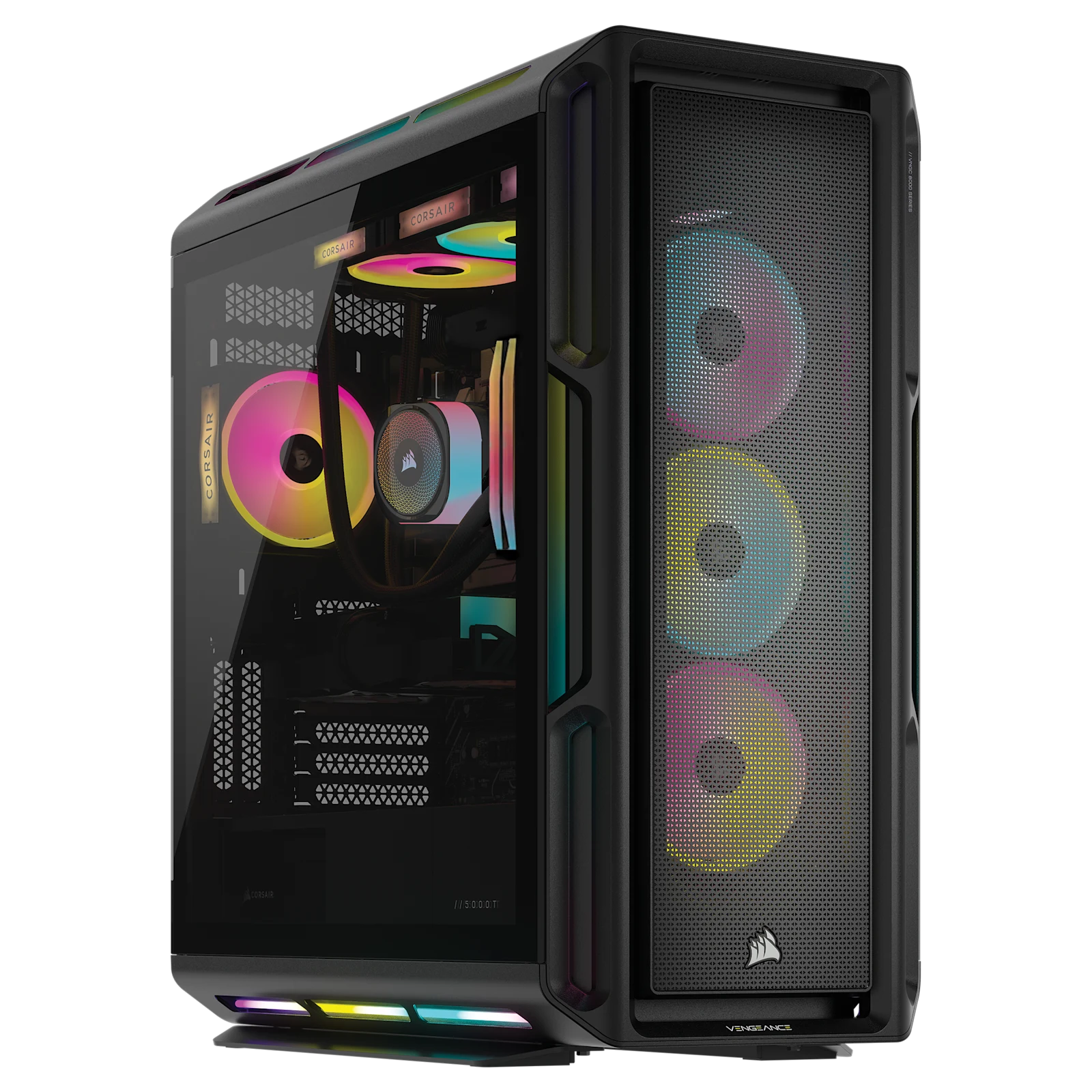
On gpt-oss-120b my cards do 151.2 tok/s to the Spark's 58.7, about 2.6x, and on a 70B model at FP8 they do 18.4 tok/s to the 2.7 LMSYS measured on the Spark. I ran mine on vLLM and those Spark figures come from llama.cpp and SGLang, so the gap is indicative rather than a matched test, but it points the same way as the ggml-org scoreboard.
The trade-off is everything around the cards. Capped at 330W each, the pair can draw up to 660W, against the Spark's 60-90W during inference (ServeTheHome's figure). They need a big PSU and a host PC, and they put out a lot of heat. One of my cards also sits on a PCIe x4 link, which slows things down when a model is split across both cards.
Which one should you buy?
Buy a GB10 box if your tools need CUDA (vLLM, SGLang or TensorRT), if you fine-tune, or if your work means long prompts, where prefill decides how long you wait: RAG (feeding your own documents into the prompt), agents, or code over big contexts. The same goes if you plan to cluster. Get the cheapest one you can buy, or the Acer if you want the coolest-running box. If you deploy to NVIDIA in production, developing on NVIDIA avoids a whole class of works-on-my-machine problems.
Buy a Strix Halo box for single-user chat and MoE models on a budget, or if you want one machine that's also your desktop. The GMKtec or the Bosgame are the value picks, the Corsair has a two-year warranty behind it, and the Framework suits you if you want to repair it yourself.
Buy a Mac Studio if you're the only user and you want the fastest generation of any 128GB box, or up to 256GB in one machine. Buy a desktop GPU if your models fit in 24-32GB.
If you can wait
The 64GB Spark goes on sale from $4,999 on 23 October. NVIDIA's RTX Spark, a Windows-on-Arm platform with up to 128GB of unified memory, comes to compact desktops in November, although NVIDIA hasn't published a price or a bandwidth figure yet. If you're waiting for memory prices to come down, I wouldn't. Micron says supply stays tight through 2028, as The Register and HWBusters reported.
Things to check before you buy
The Spark has no USB-A ports
All four of the Spark's USB ports are USB-C, and one of them is the power input. So if you plan to plug a keyboard, a mouse and a USB stick straight into it, you'll need adapters, which is what Carambat ended up buying.
Power draw adds up on an always-on box
A box like this tends to stay switched on all day, so its idle draw is the figure to look at first. ServeTheHome measured the Spark at 40-45W idle at launch. Tom's Hardware reported in February that a firmware update cut that by about a third. During LLM inference, ServeTheHome saw 60-90W. Phoronix measured the Framework Desktop, a Strix Halo box, at about 12W idle at the wall and around 100W on average under load, and Apple puts the M5 Max Mac Studio at 7W idle.
A home lab won't use a 200Gbps network card
The ConnectX-7 card is a big part of what you pay for in a Spark, and a standalone one costs about $1,600-$1,700. It's there so you can cluster two to four Sparks together. Most home networks run at 1Gig, maybe 2.5Gig, and the Spark already has 10GbE onboard, so unless you're buying more than one, that 200Gbps card will sit unused.
The GB10 and Strix Halo boxes have all got dearer
The Spark went from $3,999 at launch to $6,950. The ASUS Ascent GX10 was announced at $2,999 and starts at $5,999 now. The Corsair AI Workstation 300 launched at $2,299 and is $4,599.99, and the 128GB Framework Desktop went from $1,999 to $3,449. ServeTheHome puts the GB10 rises down to memory prices.
Fine-tuning is still easier on NVIDIA
CUDA has been around since 2007, and Ollama, vLLM, llama.cpp, PyTorch and TensorRT all work on the Spark. On Strix Halo, ROCm or Vulkan will run a model well enough, but fine-tuning and specialised kernels run into ROCm's limits.
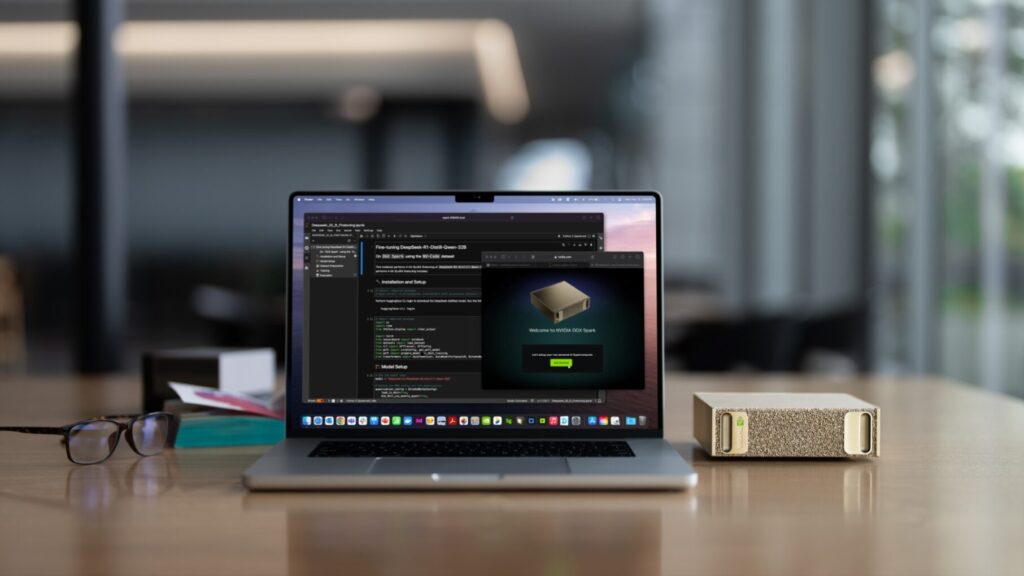
So what should you buy instead of a $6,950 Spark? A desktop GPU, unless the model you want won't fit on a card.
Before you spend anything, check which models you run and how much memory they need. The fit calculator in my GPU guide will tell you that, and if you'd rather build the whole machine, my best PCs for local AI guide covers full builds.
Related Posts
Continue reading.
- How-to GuidesHow to Connect Claude to Shopify with MCP (Dev MCP and Storefront Catalog)
- How-to GuidesHow to Use AI for Market Research with Claude
- How-to Guidesn8n MCP: How to Connect Claude Code to n8n and Use Its API Safely
- How-to GuidesHow to Run Qwen3-Coder-Next Locally: My vLLM Settings for Two 48GB RTX 4090s
- How-to GuidesHow to Build a Competitor Price Monitoring Pipeline with n8n
- How-to GuidesOpenCode vs Claude Code: Setting Up OpenCode Desktop on Windows