

Content Marketing Ideas is the tool I’ve built to relcaim the massive amount of time I have to spend monitoring my sources for announcementsm ,ew products, release – whatever.
The Problem with Content Research in 2026
Most front line content marketing workflow follows the same loop. You read a lot, you notice patterns, you get ideas, you write. The reading part is obviously important – you can’t skip building authority and still produce work that matters. But the way most of us do it is horrifically inefficient.
Welcome ContentMarketingIdeas.co
The latest addition to the family monitors your site and your faviousrite sources of information and sends you a regular ideas email with content that would suit your site and work well in the industry you write for.
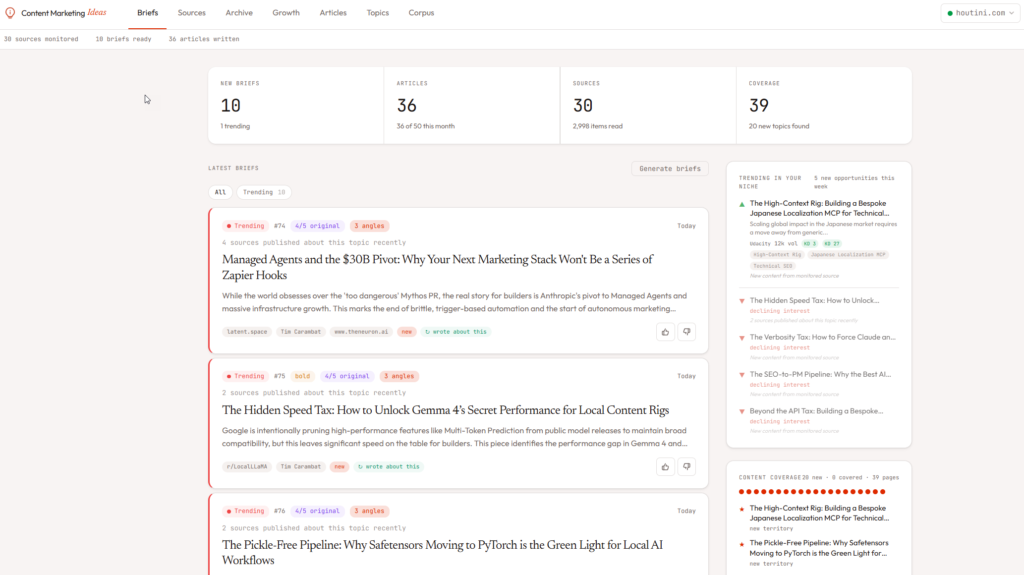
I’m someone who’s been building content research tools since 2015. I built the SEOgadget Content Strategy Generator back when Google Spreadsheets and XPath scraping were considered cutting edge. So this isn’t my first attempt at solving this problem. Briefs, in the image above are your daily / weekly content ideas based on topics that are trending or clear content gaps between you and your competitors or just a contrariann take on an insdustry wide discussion.
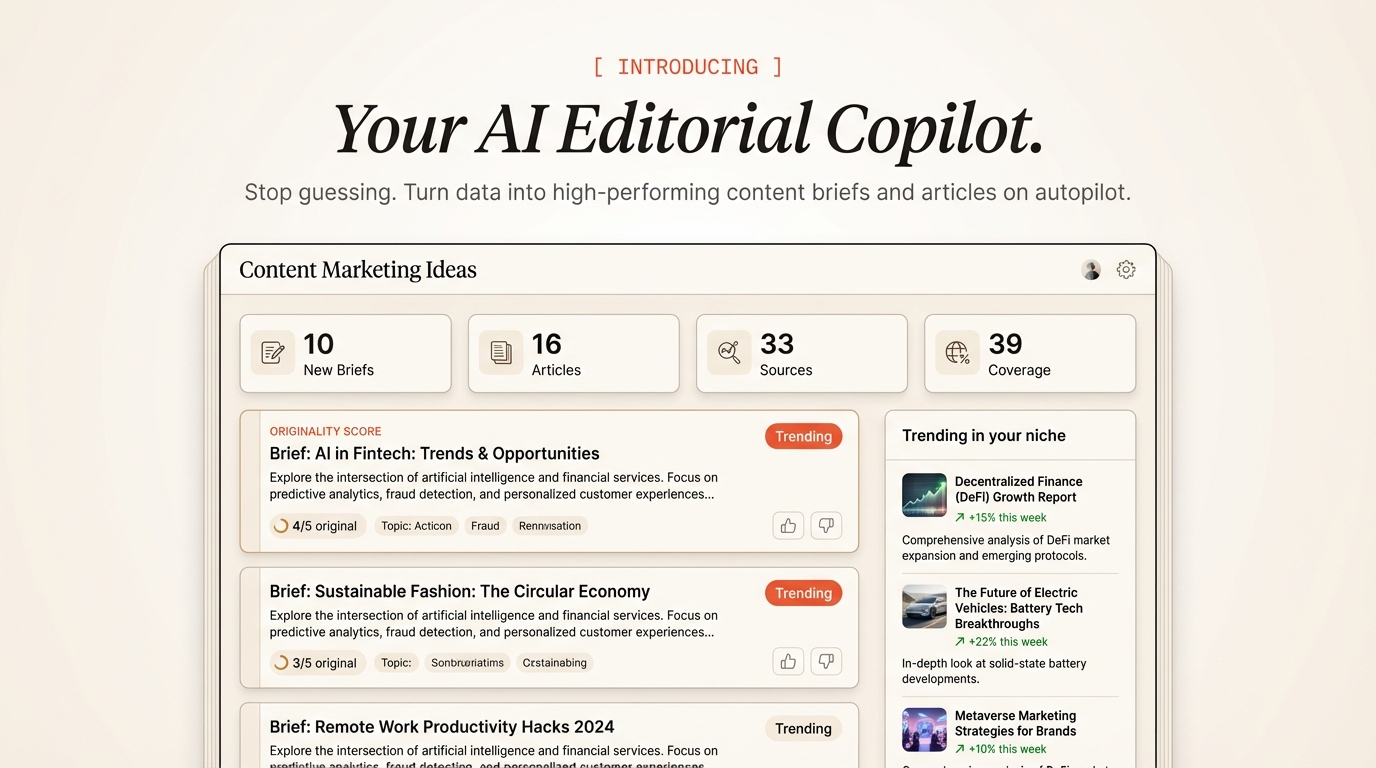
What’s Content Marketing Ideas?
It’s a source monitor that thinks editorially. You give it the feeds you already read – YouTube channels, RSS feeds, subreddits, podcasts, news keywords – and it watches them continuously. When it spots something worth writing about, it doesn’t just flag the article. It synthesises a brief with a thesis, an editorial play, a content gap analysis, and alternative angles.

Think of it like having a research assistant who reads everything you’d normally read, but who also checks your search console data, knows what you’ve already published, and frames every idea as “here’s what you should write and why” rather than “here’s what happened.”
Each brief has a thesis statement, an editorial play explaining how to position the piece, a gap analysis showing what’s missing from the existing coverage, and even alternative angles rated as obvious, bold, or contrarian. There’s an originality score too – how novel is this angle compared to what’s already out there.
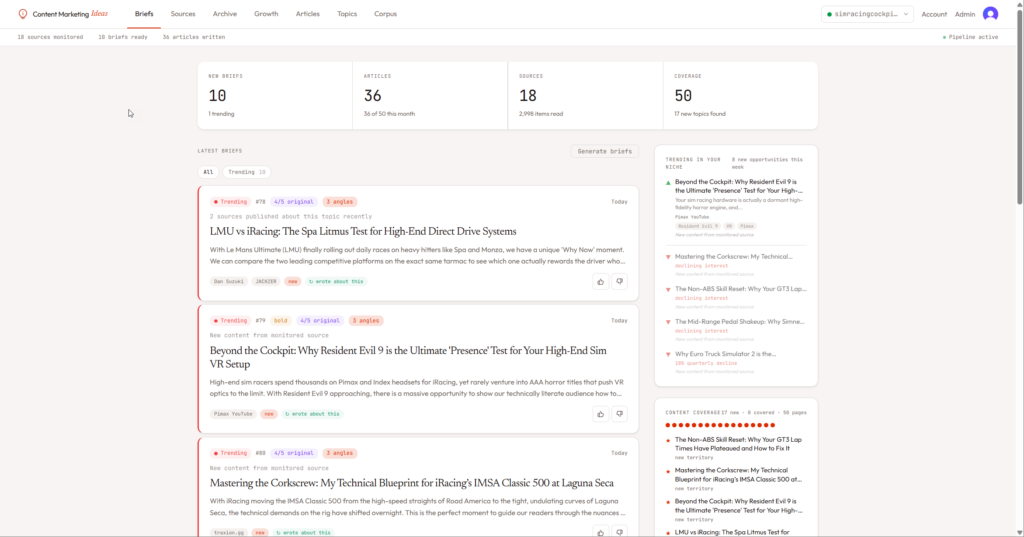
A brief might say: “The intersection of LLM inference and edge computing is underserved. Three sources covered the Cloudflare announcement, but none addressed the practical implications for solo developers running production workloads. Bold angle: frame this as the death of the centralised inference model.”
That’s the kind of output I was building manually in my head every morning. Now the system does it and I just decide which briefs to act on.
Getting Started
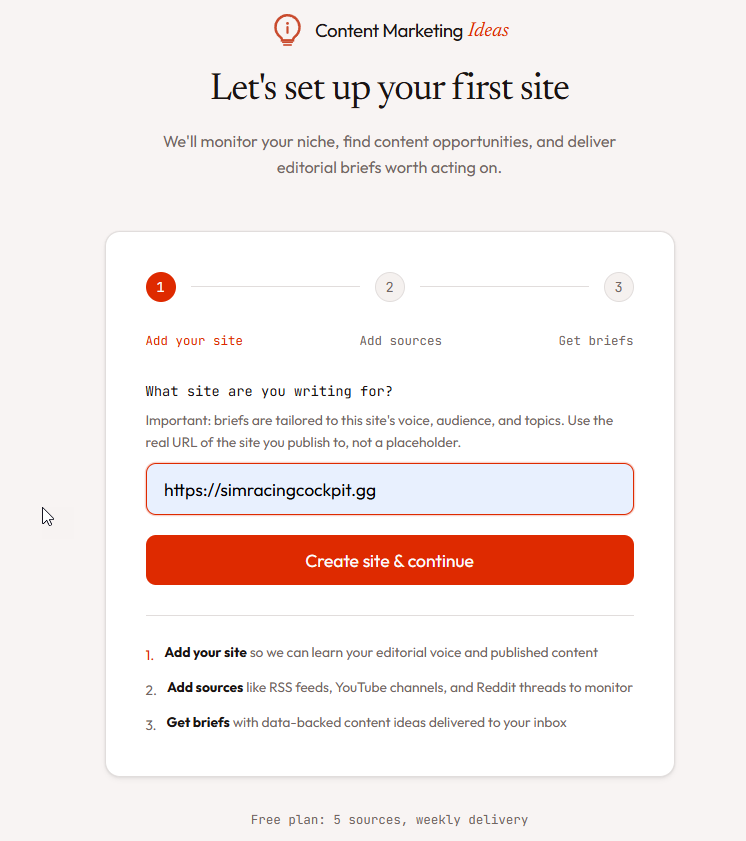
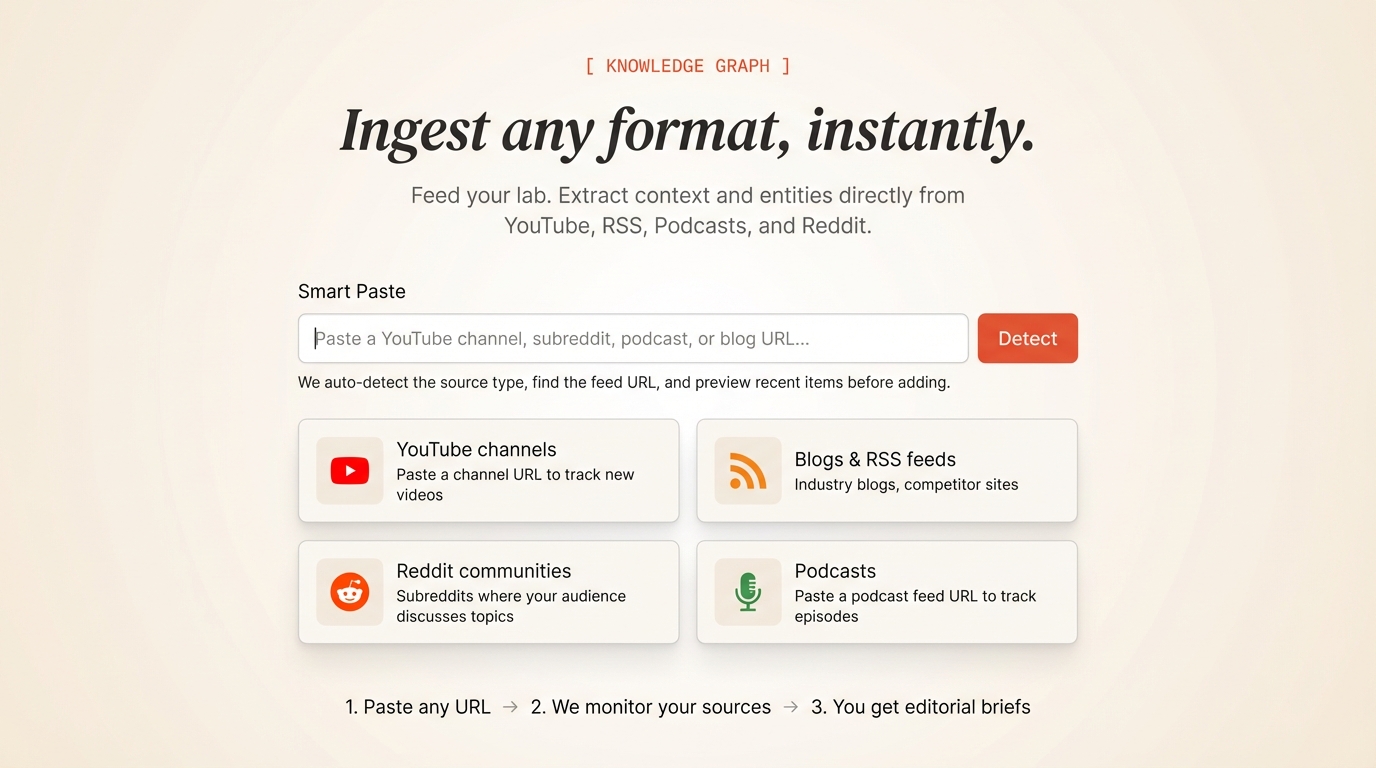
Sign up at contentmarketingideas.co, add your site URL, and start pasting source URLs (image below) The system auto-detects whether a URL is an RSS feed, YouTube channel, subreddit, or podcast. Paste a URL, hit detect, confirm the source type, and you’re monitoring.
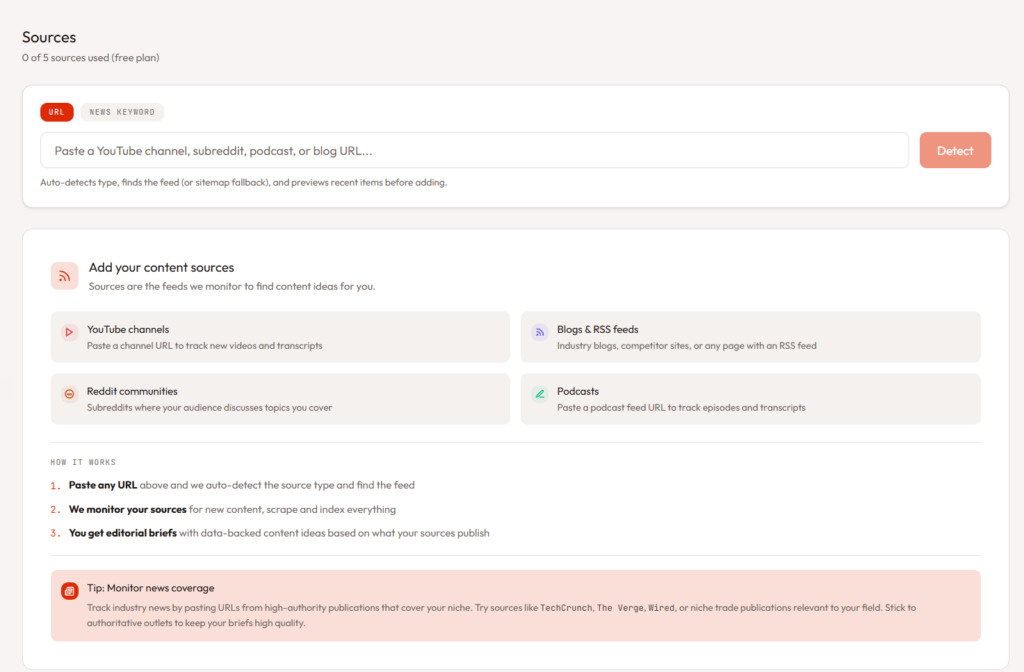
The free tier gives you 5 sources and weekly delivery – enough to evaluate whether the briefs are useful. If you want daily delivery, articles, and the full Topic Explorer, that’s the Pro plan at $39.99/month.
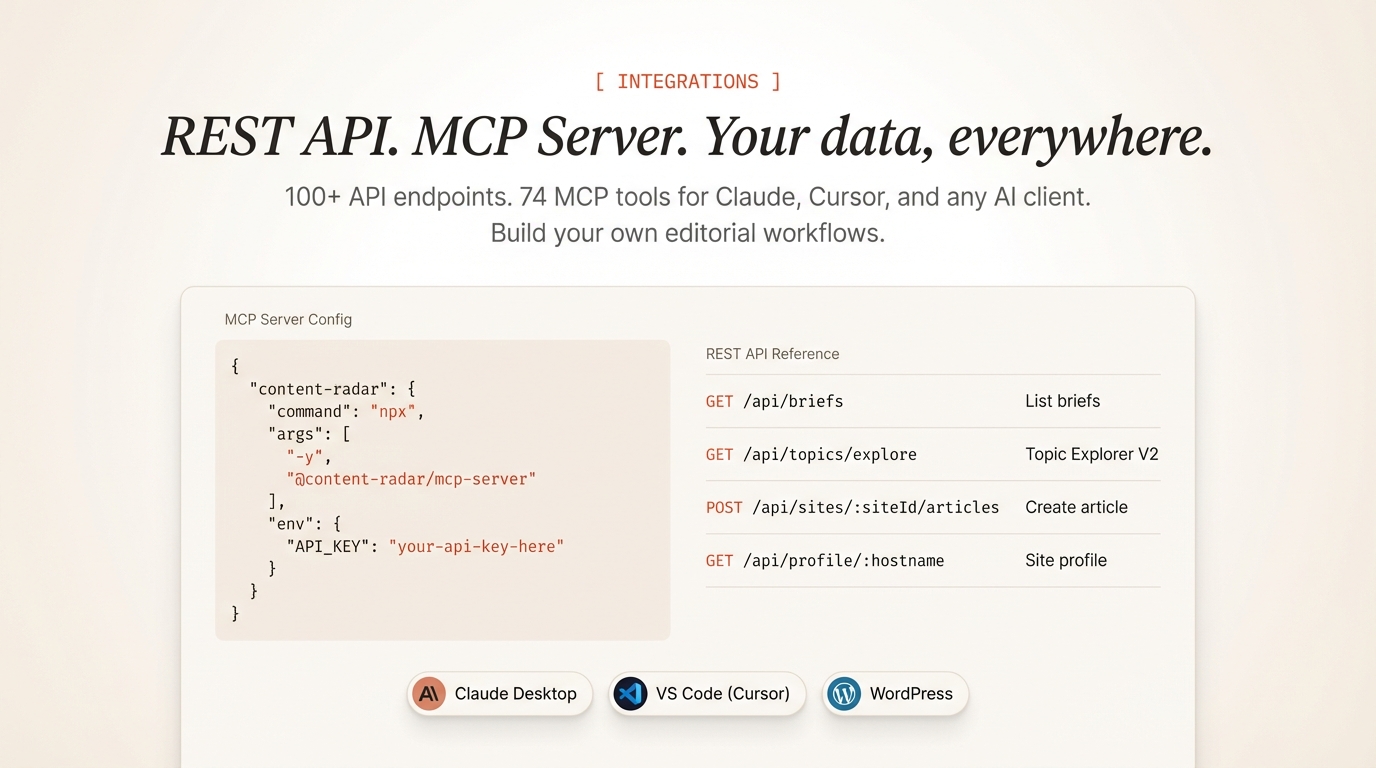
If you’re the kind of person who lives in Claude Desktop or Cursor, there’s an MCP server you can install with one line:
{
  "mcpServers": {
    "contentmarketingideas": {
      "command": "npx",
      "args": ["-y", "@houtini/contentmarketingideas"],
      "env": {
        "CMI_API_KEY": "YOUR_API_KEY"
      }
    }
  }
}
59 tools. Manage sources, read briefs, generate articles, check coverage – all from your AI assistant.
Core Features
Source Monitoring Across Five Formats
You can monitor RSS feeds, YouTube channels, Reddit communities, podcasts, and news keywords. Paste any URL and the system auto-detects the type, finds the feed URL, and starts pulling content. I’ve got about 30 sources across my two sites and it catches things I’d have missed scrolling manually.

The bit that most people miss is the news monitoring. You can add a keyword like “MCP server” and it’ll pull from Google News RSS – high-authority publications reporting on your topic. I use this for houtini.com to catch AI tool announcements from outlets I don’t subscribe to.
Editorial Briefs, Not News Summaries
This is the core of the product and the thing I’m most opinionated about. Every content tool I’ve tried – BuzzSumo, Clearscope, the lot – gives you data. Trending topics, search volumes, keyword difficulty. Useful data, to be fair. But data isn’t an editorial brief.
A brief from Content Marketing Ideas has a thesis (“here’s the argument”), an editorial play (“here’s how to frame it”), a gap analysis (“here’s what competitors missed”), and three alternative angles. It also pulls in your own published content to show what you’ve already written on the topic, and suggests internal links.
The briefs are generated by Gemini, cross-referenced against your corpus and search console data, and enriched with keyword volumes, People Also Ask questions, entity relationships from Wikidata, and competitive coverage data from DataForSEO and Brave Search. A lot of machinery behind each brief.
Topic Explorer
This one changed how I think about content planning. The Topic Explorer treats every topic as a first-class entity with a lifecycle – covered, trending, gap, declining, or emerging. It pulls from your briefs, your corpus, your GSC data, and Wikidata to build a map of your editorial territory.
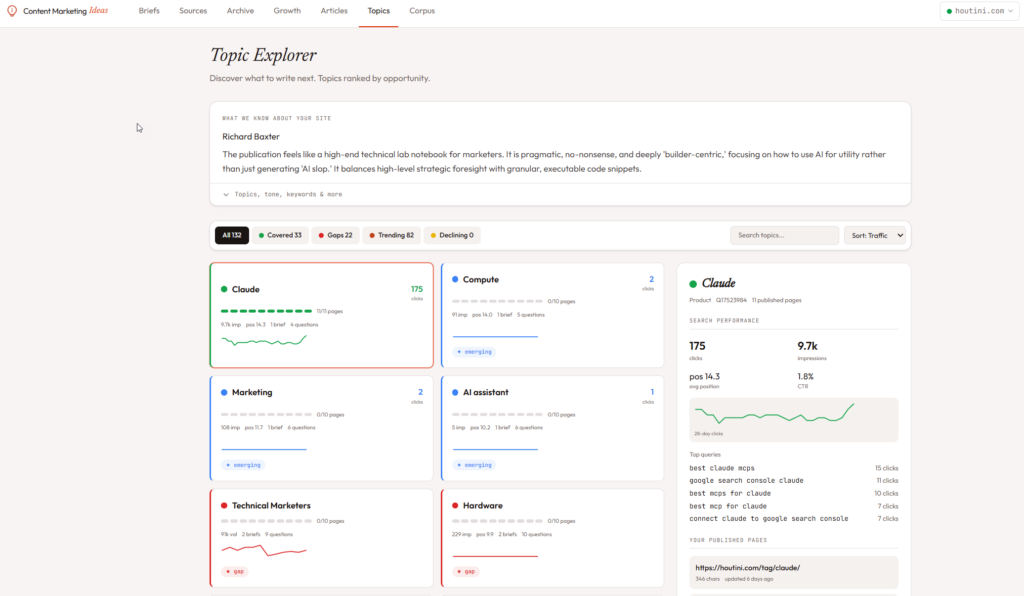
I can see at a glance that “Claude” has 175 clicks and 9.7k impressions, that I’ve published 7 pages on it, and that my average position is 14.3. I can also see that “Marketing” is a gap – 2 clicks, position 38 – meaning my audience is searching for it but I haven’t covered it well. The sparklines show 28 days of trend data so I can spot whether a topic is growing or dying.
The clusters group related topics together. “AI assistant” and “Claude” and “LLM” end up in the same cluster, which makes sense for planning a content hub around that theme.
Voice-Matched Article Generation
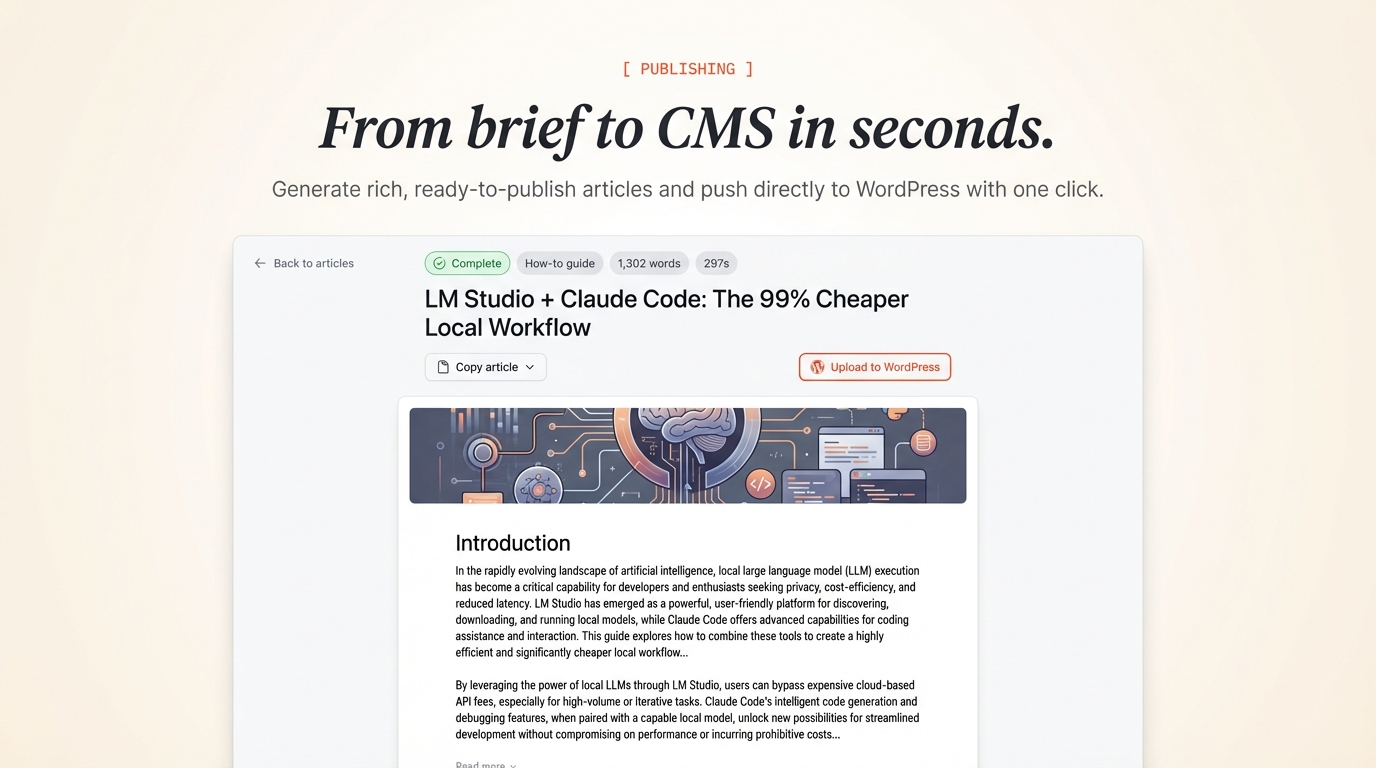
This is the feature that took the longest to build, and honestly, the one I’m least satisfied with. The system generates full articles from briefs – you click “Write article” and get a 1,300-1,800 word draft in about 90 seconds. But here’s the interesting bit: it writes in your voice.
I built 16 statistical analysers that measure your published content and produce a deterministic writing style guide.
The articles are decent starting points. They’re not finished copy – I always edit them, add my own examples, sharpen the opinions. But they capture the rhythm and structure of my writing better than anything else I’ve tried, and that’s a huge head start compared to a blank page.
Google Search Console Integration
Connect your GSC account and the system pulls in daily search performance data. This feeds into the brief generation – the system can now detect declining queries (topics you’re losing ground on), cannibalization (multiple pages competing for the same query), and opportunities (high-impression, low-position queries you could improve).
The daily data also powers the sparklines in the Topic Explorer. If you’re not connected to GSC, the system still works, but you’re missing the most valuable signal input. I’ve written a setup guide for GSC with Claude Desktop if you want the background on how search console data works with AI tools.
Content Marketing Ideas is at contentmarketingideas.co. The MCP server is open source at @houtini/contentmarketingideas on npm. If you want to see the full API and developer docs, there are 100+ REST endpoints alongside the 59 MCP tools.
Related Articles

Content Marketing Ideas: What It Is, How I Built It, and Why I Use It Every Day
Content Marketing Ideas is the tool I’ve built to relcaim the massive amount of time I have to spend monitoring my sources for announcementsm ,ew products, release – whatever. The Problem with Content Research in 2026 Most front line content marketing workflow follows the same loop. You read a lot, you notice patterns, you get … <a title="Content Marketing Ideas: What It Is, How I Built It, and Why I Use It Every Day" class="read-more" href="https://houtini.com/content-marketing-ideas-what-it-is-how-i-built-it-and-why-i-use-it-every-day/" aria-label="Read more about Content Marketing Ideas: What It Is, How I Built It, and Why I Use It Every Day">Read more</a>

Are Claude Skills Just an Alternative to Reading a Book or is there more than that?
I’ve too long treating skills like magic incantations of a topic that really, I don’t fully understand. I strated out not really thinking about skills or embracing them. I still don’t, fully, becuase most of what I do is command line, terminal, etc etc – I’m on top of computer use! BUT – I have … <a title="Content Marketing Ideas: What It Is, How I Built It, and Why I Use It Every Day" class="read-more" href="https://houtini.com/content-marketing-ideas-what-it-is-how-i-built-it-and-why-i-use-it-every-day/" aria-label="Read more about Content Marketing Ideas: What It Is, How I Built It, and Why I Use It Every Day">Read more</a>
Using a Local LLM to Audit Your Codebase – What Qwen3 Coder Next Catches (and Misses)
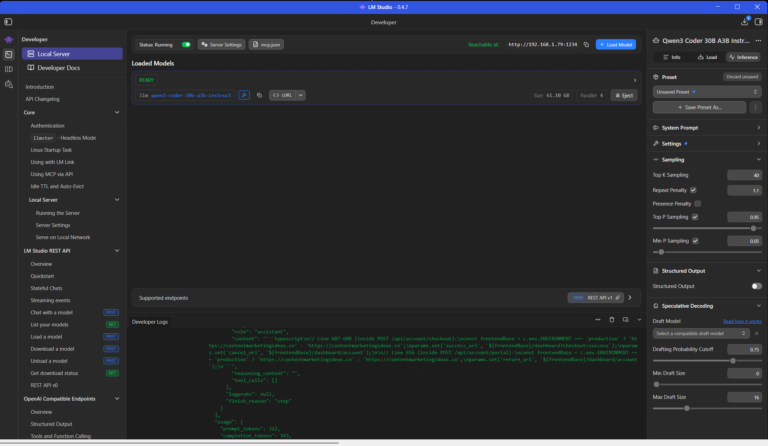
I run a local copy of Qwen3 Coder Next on a machine under my desk. It pinned down a race condition in my production code that I’d missed. It also told me, with complete confidence, that crypto.randomUUID() doesn’t work in Cloudflare Workers. It does. That tension – real bugs mixed with confident nonsense – is … <a title="Content Marketing Ideas: What It Is, How I Built It, and Why I Use It Every Day" class="read-more" href="https://houtini.com/content-marketing-ideas-what-it-is-how-i-built-it-and-why-i-use-it-every-day/" aria-label="Read more about Content Marketing Ideas: What It Is, How I Built It, and Why I Use It Every Day">Read more</a>

How to Make SVGs with Claude and Gemini MCP
SVG is having a moment. Over 63% of websites use it, developers are obsessed with keeping files lean and human-readable, and the community has turned against bloated AI-generated “node soup” that looks fine but falls apart the moment you try to edit it. The @houtini/gemini-mcp generate_svg tool takes a different approach – Gemini writes the … <a title="Content Marketing Ideas: What It Is, How I Built It, and Why I Use It Every Day" class="read-more" href="https://houtini.com/content-marketing-ideas-what-it-is-how-i-built-it-and-why-i-use-it-every-day/" aria-label="Read more about Content Marketing Ideas: What It Is, How I Built It, and Why I Use It Every Day">Read more</a>

How to Make Images with Claude and (our) Gemini MCP
My latest version of @houtini/gemini-mcp (Gemini MCP) now generates images, video, SVG and html mockups in the Claude Desktop UI with the latest version of MCP apps. But – in case you missed, you can generate images, svgs and video from claude. Just with a Google AI studio API key. Here’s how: Quick Navigation Jump … <a title="Content Marketing Ideas: What It Is, How I Built It, and Why I Use It Every Day" class="read-more" href="https://houtini.com/content-marketing-ideas-what-it-is-how-i-built-it-and-why-i-use-it-every-day/" aria-label="Read more about Content Marketing Ideas: What It Is, How I Built It, and Why I Use It Every Day">Read more</a>

Yet Another Memory MCP? That’s Not the Memory You’re Looking For
I was considering building my own memory system for Claude Code after some early, failed affairs with memory MCPs. In therapy we’re encouraged to think about how we think. A discussion about metacognition in a completely unrelated world sparked an idea in my working one. The Claude Code ecosystem is flooded with memory solutions. Claude-Mem, … <a title="Content Marketing Ideas: What It Is, How I Built It, and Why I Use It Every Day" class="read-more" href="https://houtini.com/content-marketing-ideas-what-it-is-how-i-built-it-and-why-i-use-it-every-day/" aria-label="Read more about Content Marketing Ideas: What It Is, How I Built It, and Why I Use It Every Day">Read more</a>