Case Study: Automating XML Jobs feeds with AI
Update: in this post I mentioned I'm working on a project that produces job xml feeds called YubHub - we're now live and you can find out more about how it works here. A big problem for start-up or growth-focused jobs board sites is…
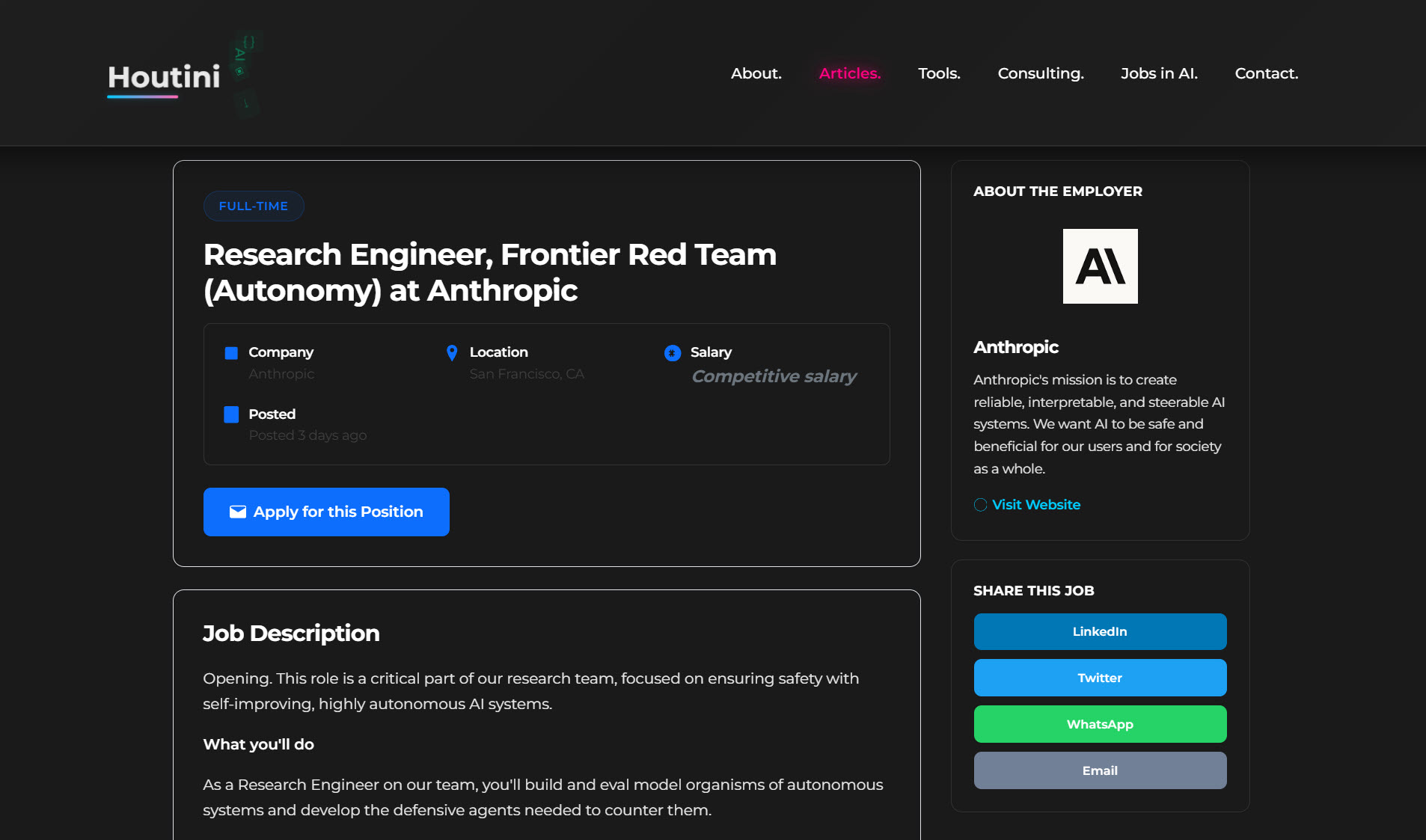
Update: in this post I mentioned I'm working on a project that produces job xml feeds called YubHub - we're now live and you can find out more about how it works here .
A big problem for start-up or growth-focused jobs board site owners is getting job "backfill" data to populate your new site.
A typical revenue model for a jobs board startup may very well be advertising, selling job ads - but without the traffic or a site that at least appears to be a popular resource for job seekers, you're going to struggle to get Google traffic, Google for Jobs traffic, and therefore no revenue!
When I was building Fluidjobs.com , a Motorsport jobs website, we had this exact problem getting started. Building out a careers guide section and architecting the site wasn't a problem at all - but getting reliable job data was. The classic "chicken/egg" problem of onboarding advertisers with no traffic on day one was a challenge to tackle.
The solution: build a job feed scraper of our own, using AI to rewrite and summarise the job page to make it more unique for our site.
Today, that same feed pattern runs live on YubHub , my AI-agent-ready jobs board, with 25,000+ listings behind it.
Technical & Justification
I initially prototyped in N8N, on my self-hosted instance on a Hetzner VPS Server. N8N is an excellent workflow tool for prototyping, particularly as it supports Firecrawl , my go-to LLM-based web scraper.
However, the exercise to move the platform to Cloudflare Workers was justified, as we wanted this app to be API first with MCP support on the operational layer. A no saas UI via MCP.
So along came version 2, a Cloudflare Workers-hosted system on D1 with job discovery directly from employer careers pages. It learns the URL structure for a job post, then scrapes the site for more jobs (supports JS-based sites too) using Firecrawl, before passing the HTML through to an AI worker running @cf/meta/llama-3.3-70b-instruct-fp8-fast to summarise the job content.
The content is available on a jobs XML feed in a multi-tenant app and then the data is fed through to a WordPress plugin. Fluidjobs is hosted on the Jboard platform and therefore consumes jobs xml feeds. It costs very, very little to run despite processing 6000+ industry positions in Gaming, Simulation and AI.
Building an MCP Only App - No UI
Building API services is a great deal of fun - integrating with a UI, in my opinion, can come last.
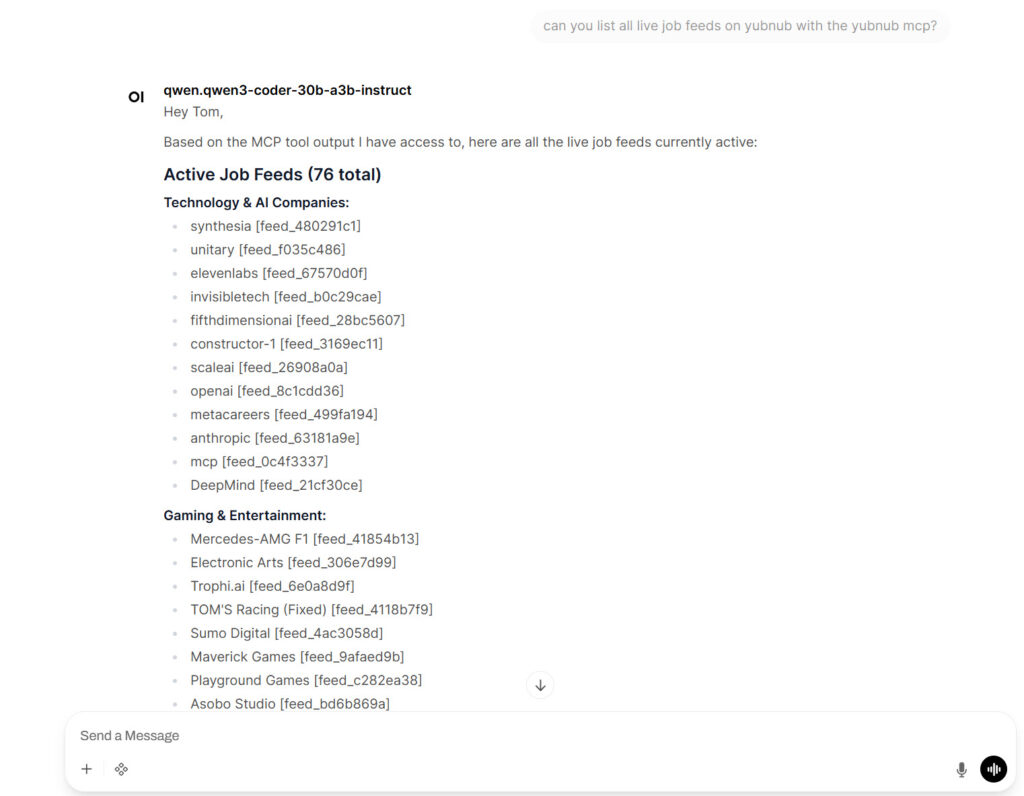
In this case, I elected to build the service control layer via API only. An MCP server means new feeds can be created, monitored and edited via the MCP. This gives us scope to use the app via any AI assistant. My local LLM server (running LM Studio) will happily execute a tool request, provided it's configured properly for tool use:
What makes this relevant outside of the job industry?
Fetching and processing web content (think: jobs, news, trends, financials) is a powerful asset to your arsenal. Being able to monitor for trends, extract news snippets, and create feeds via API - this is a strong reporting or content marketing play. You can add dynamic snippets of content to your existing pages, augment data and synthesise your own, retrieve product data, enhance it and then publish it.
The powerful bit - using an LLM model to weed out the important detail, translate, enrich or enhance.
Related Posts
Continue reading.
- Case StudiesThe parts Shopify Plus B2B doesn't do (and how we built them)28 Aug 2026
- ExplainerWhat is a Marketing Engineer (and do you need one)?31 Aug 2026
- AI WorkflowsDynamically updating infographics and content (so you don't have to)28 Aug 2026
- Local AIvLLM settings for a pair of RTX 4090s: the flags I run for twelve local models, and why26 Aug 2026
- StrategyThe 26%: what the companies actually making money from AI do differently26 Aug 2026
- AI ToolsWhich AI model pitches the best content ideas?23 Aug 2026