Content automation with a system behind it
My system researches, drafts and fact-checks Houtini site properties to keep pages relevant, up to date while preserving a natural tone of voice from the original author. Getting an LLM to "sound" like you in writing is a fiendishly difficult task and one that we're all yet to master - I've spent a year building it and I can produce strong, topic focused articles with fresh research ready to go to your editor before publish.
What the chore really is
Anyone can point a chatbot at a topic and get an article. That's rather the problem. What comes back is the same confident, texture-free prose everyone else is publishing, with the same invented details, and nobody checking any of it. Publish that at volume and you don't have a content operation, you have a liability with a posting schedule.
The real chores turned out to be these: research that's traceable to sources. Facts checked before they ship, not after a reader emails. A voice that stays recognisably one person's across hundreds of pieces. And a pipeline that can produce the raw materials without a human in the loop, until of course it's time for edit.
How I thought about it
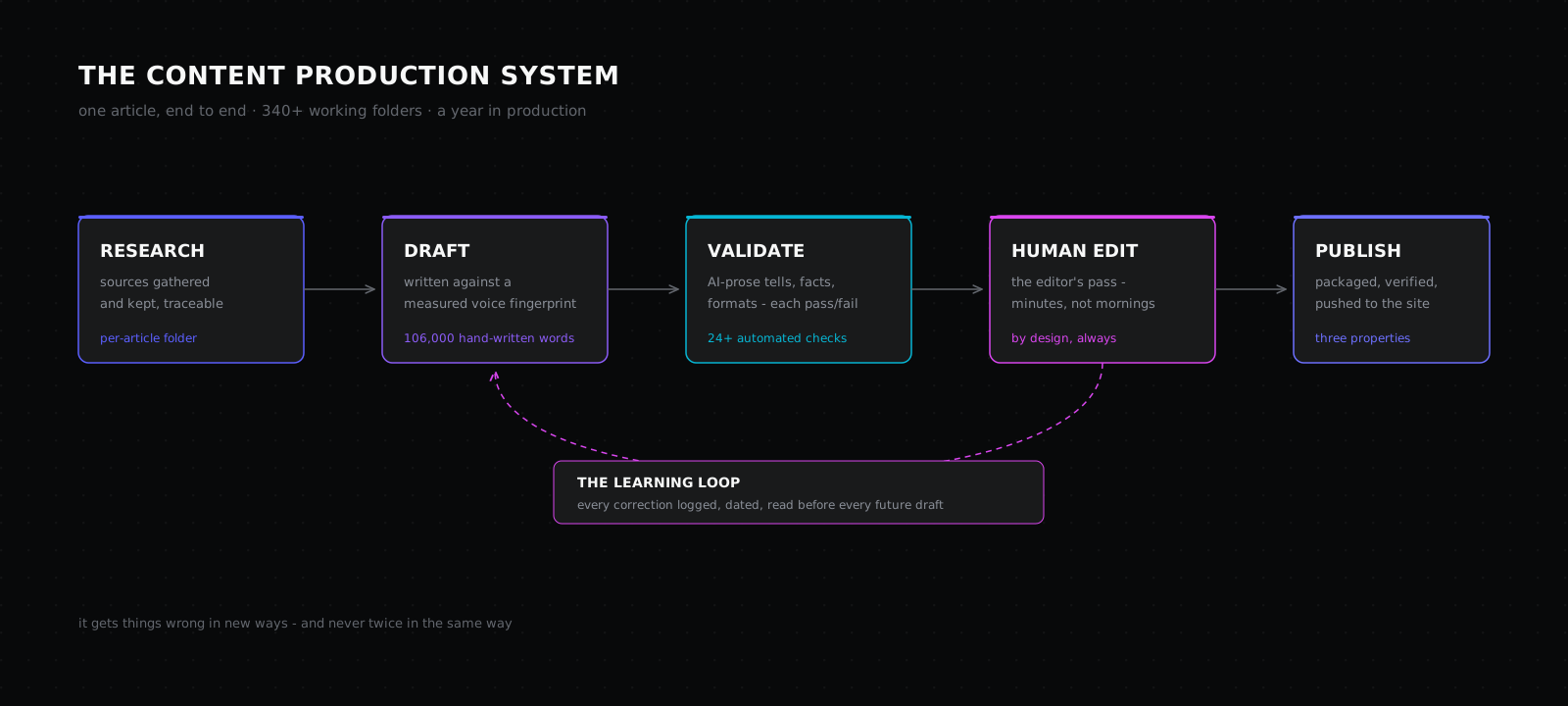
Treat content as a production system, not a prompt. Mine runs on per-article working folders - over 340 of them now, each one an audit trail with its research, drafts and final packaged output - through workflow prompts that enforce the order: research first, sources kept; then drafting against a voice fingerprint that's measured, not vibes. The profile for this site alone was built from 43 articles and 106,000 words I wrote by hand, down to first-person rate per hundred words. The draft then faces a battery of twenty-odd automated checks - the clichés and tells of AI prose, formatting, factual leakage - each recorded pass or fail individually, because batched checks hide which one failed. Ask me how I know.
Even the updates are systematised: a five-minute triage gathers evidence, a rubric picks the scope, and a mutation budget caps what that scope is allowed to touch. A price correction stays a price correction. It doesn't quietly become a rewrite.
The bit I'm most pleased with, though, is the learning loop. When I correct the writing - and I do, most weeks - the correction goes into a dated log the same session, and the logs are read before every future draft. Just today the system shipped a phrase pattern I'd banned that very morning, because my detection net didn't cover the new variant. The variant went into the log within the hour. It still gets things wrong, is the point. It gets them wrong in new ways, and never twice in the same way, and after a year of that compounding the first drafts land close enough that my edit pass is minutes, not mornings.
Where it stands
Live, and it has run my own properties for a year - which I'd suggest is the only proof of a content system worth taking seriously. My edit pass is still part of the pipeline, by design. I would not sell a client a system I don't publish through myself.
Per-article research folders → multi-phase workflow prompts → voice-fingerprint drafting → 24-check validation battery → packaged publish → dated correction logs feeding every future draft.